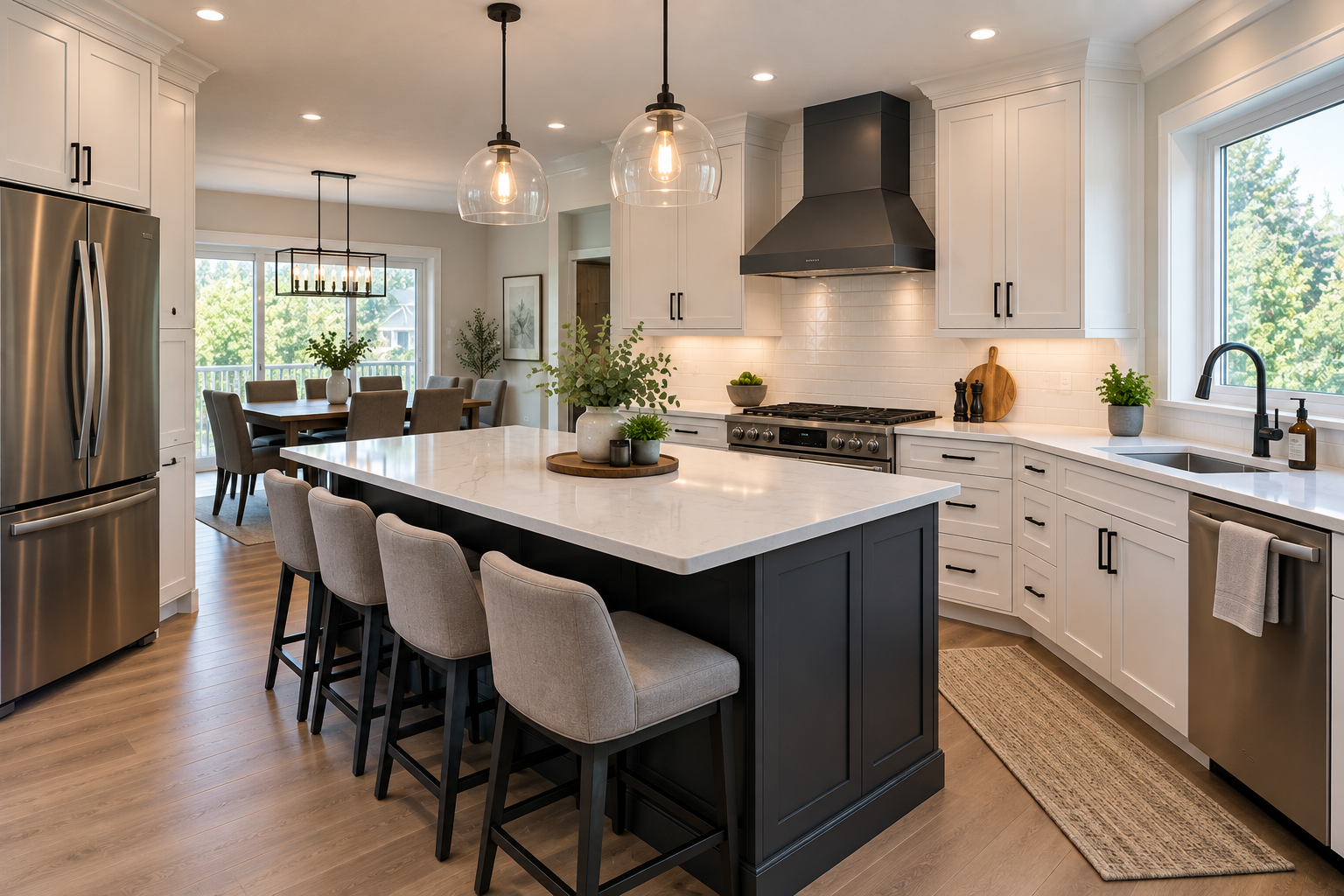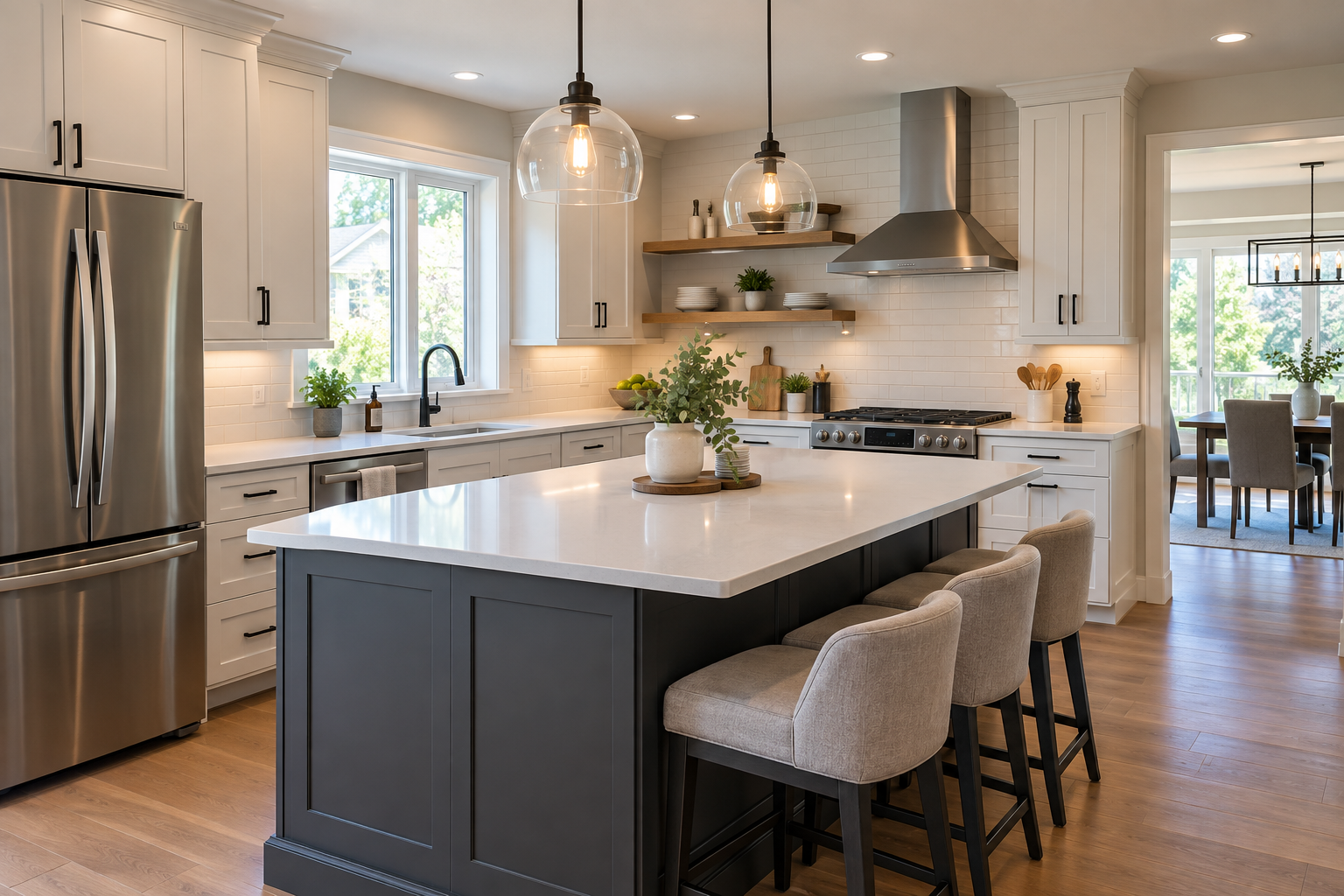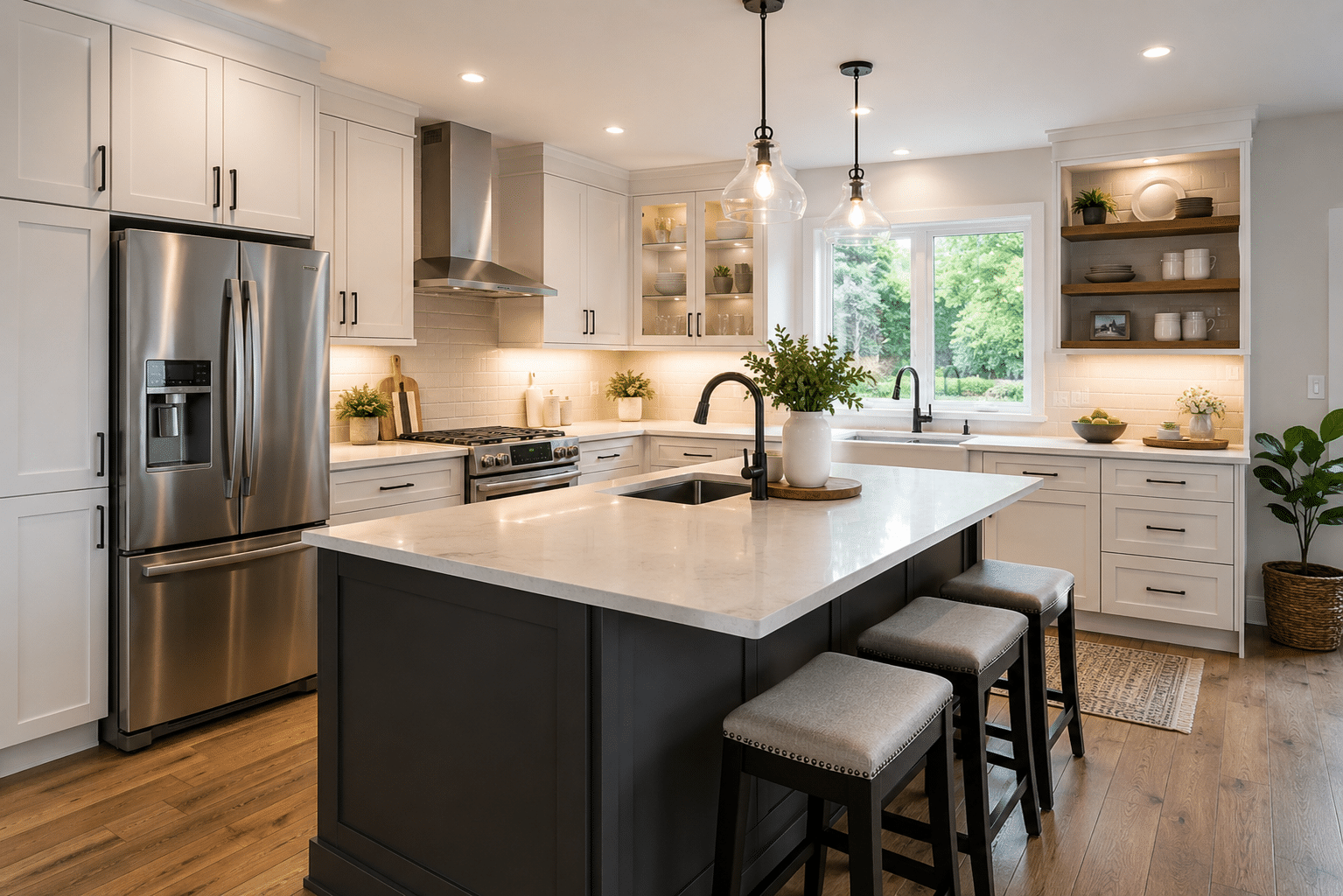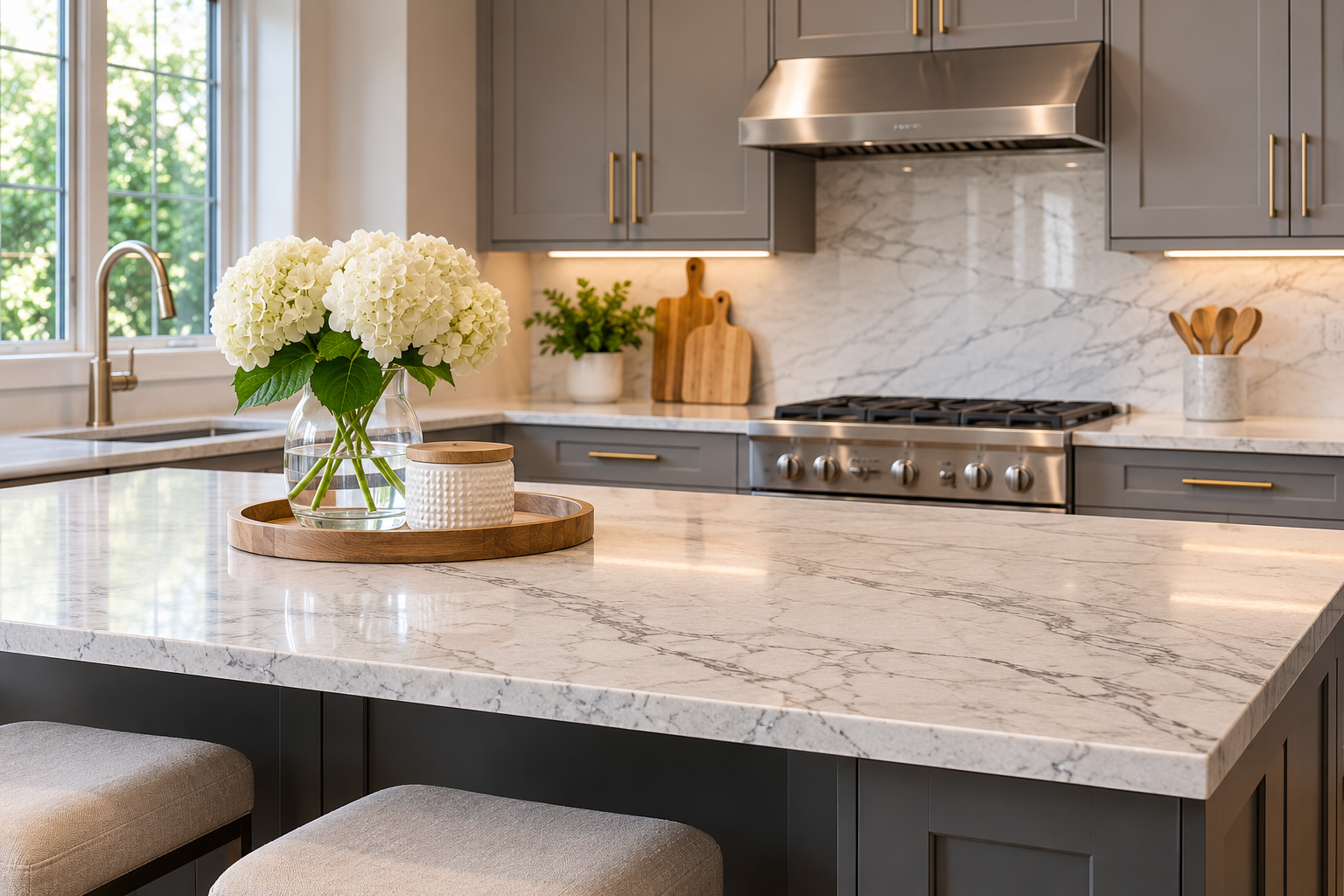
Kitchen countertops occupy a prominent position in most kitchens. Their colour, pattern and finish can influence how the entire room looks, making them an important consideration during a renovation.
For homeowners planning kitchen renovations in Burlington, choosing kitchen countertops involves more than selecting an attractive sample. The countertop should complement the cabinetry, flooring, backsplash and overall design while supporting everyday household activities.
Understanding how different kitchen countertop materials interact with surrounding finishes can help homeowners make a more informed decision.
Start With the Kitchen Design, Not the Countertop Sample
A countertop that looks appealing in a showroom may create a different impression once installed across a large kitchen surface.
Cabinet colours, flooring materials, backsplash selections and lighting all influence how a countertop appears within the room.
For example, a strongly patterned countertop may become the kitchen’s main visual feature, while a quieter surface can allow cabinetry or a decorative backsplash to attract more attention.
Natural daylight and artificial lighting can also affect how colours and finishes appear. A surface that looks warm under showroom lighting may appear cooler when placed beside different materials at home.
The kitchen’s layout matters as well. A large island may make the countertop especially prominent, while a smaller kitchen may benefit from a more coordinated appearance across its visible surfaces.
When choosing the right kitchen layout, it is useful to consider how countertop surfaces will contribute to the finished design.
Quartz Countertops for a Coordinated Appearance
Engineered quartz countertops offer a wide selection of colours, patterns and finishes.
Some products feature relatively consistent colouring, while others are designed to resemble the veining and movement found in natural stone.
This variety can make quartz appealing when homeowners want a countertop that coordinates closely with their cabinetry and backsplash.
For example, a lightly patterned quartz surface may complement simple white cabinets without introducing too much visual activity.
Quartz can also work with darker or wood-finished cabinetry, depending on the selected colour and pattern.
For kitchens with large islands, a relatively consistent pattern may help create a more uniform appearance across the surface.
Maintenance requirements vary by product. Although many quartz surfaces are designed for routine household use, homeowners should review manufacturer guidance regarding cleaning, heat exposure and staining.
Granite Countertops for Natural Variation
Granite appeals to homeowners who appreciate the individual characteristics of natural stone.
Each slab can contain variations in colour, mineral patterns and veining, creating a distinctive appearance.
These characteristics can work particularly well with natural wood cabinetry, where the stone’s tones may complement the warmth and grain of the wood.
However, granite with strong movement or contrasting colours can become a dominant feature in the kitchen.
In these situations, a simpler backsplash may help create visual balance.
Homeowners should also consider how the pattern will appear across larger countertop sections. Viewing the actual slab, where possible, can provide a better understanding of its overall appearance than relying on a small sample.
When comparing quartz vs granite countertops, appearance is only one consideration. Homeowners should also review the maintenance requirements of the specific products they are considering.
Granite care can vary depending on the stone and finish, including whether sealing is recommended.
Porcelain Countertops for a Different Design Direction
Porcelain slab countertops provide another option for homeowners exploring different kitchen appearances.
Available designs can include stone-inspired patterns, understated colours and contemporary finishes.
Certain porcelain products also support thinner-looking profiles, which may complement kitchens with clean cabinet lines and minimal decorative details.
A porcelain surface with subtle colouring can help create a coordinated appearance alongside modern cabinetry.
Alternatively, a more pronounced stone-inspired pattern may provide contrast in a kitchen with simple cabinet doors and limited decorative features.
However, edge treatments, fabrication requirements and available finishes depend on the specific product.
Homeowners should review these characteristics before deciding whether porcelain suits their preferred design.
Laminate Countertops Still Have a Place
Laminate countertops offer a broad range of decorative appearances, including designs inspired by wood and natural stone.
This variety allows homeowners to explore different visual styles without limiting their choices to stone-based materials.
A wood-look laminate may complement painted cabinets, while a subtle stone-look pattern can coordinate with a contemporary backsplash.
Laminate differs from quartz, granite and porcelain in its construction and surface characteristics.
Cleaning, heat exposure, edge details and maintenance expectations should be considered when evaluating specific products.
The selected edge profile can also influence the overall appearance, particularly where the countertop is prominently visible.
The important question is whether the selected laminate complements the kitchen design and meets the household’s practical needs.
Which Countertop Works With Your Cabinet Colour?
Cabinetry and countertops occupy substantial visual space, making their relationship central to kitchen countertop design.
Light cabinets paired with subtly patterned countertops can create a coordinated appearance. Dark cabinetry may benefit from contrasting surfaces that help define the countertop area.
Natural wood cabinets can work with stone tones that complement their warmth, grain and undertones.
Two-tone kitchens introduce another consideration. When upper and lower cabinets differ in colour, the countertop can help connect the finishes or provide intentional contrast.
For example, a neutral countertop may provide a visual connection between painted perimeter cabinets and a wood-finished island.
Patterned countertops can also work with simple cabinet finishes, allowing the surface to become a focal point.
Homeowners should consider whether they want the countertop to blend with the cabinetry or stand apart from it.
There is no universal combination that suits every kitchen. The goal is to create a deliberate relationship between the materials rather than selecting each finish independently.
How Much Pattern Is Too Much?
Countertop patterns can influence how busy or calm a kitchen feels.
A surface with pronounced veining may attract considerable attention, especially when installed across a large island or extended counter area.
If the backsplash also features strong patterns, the two surfaces may compete visually.
Choosing a quieter backsplash can allow a distinctive countertop to stand out without overwhelming the room.
Alternatively, a simple countertop can provide a neutral foundation for more decorative tile, cabinetry or flooring.
Lighting, cabinet details and the size of the kitchen also affect how these combinations appear.
The direction and scale of countertop patterns can also influence the finished appearance. Large veins may be more noticeable across an island, while smaller patterns can create a different effect along perimeter counters.
Visual balance is ultimately a design preference, but considering all visible finishes together helps homeowners avoid combinations that feel disconnected.
Think About How You Actually Use Your Kitchen
Appearance matters, but countertops must also support everyday activities.
Households that prepare meals frequently may prioritize cleaning requirements, surface wear and how materials respond to common kitchen activities.
Heat exposure, potential staining and regular use should also be considered.
Families with young children or busy kitchens may place particular importance on surfaces that suit their cleaning habits and maintenance expectations.
Different countertop materials have different characteristics, and performance can vary between individual products.
Homeowners should review the care recommendations and limitations of the specific surfaces they are considering.
A countertop that complements the design but does not suit the household’s maintenance preferences may not be the most practical choice.
Choosing Countertops as Part of a Complete Kitchen Renovation
Rob’s Quality Construction provides kitchen renovations in Burlington for homeowners looking to improve the appearance and functionality of their kitchens.
Countertop decisions are most effective when considered alongside cabinetry, backsplash materials, lighting, flooring and the overall layout.
A countertop’s colour, pattern and profile can influence surrounding design choices, making coordination an important part of renovation planning.
For example, selecting a strongly patterned countertop may influence whether a simple backsplash is preferred. Similarly, the countertop’s colour can affect how cabinet finishes appear together.
Considering these elements together helps homeowners develop a kitchen design that reflects their preferences and everyday needs.
Choose a Countertop That Complements the Whole Kitchen
The most suitable countertop is not necessarily the most dramatic material or the one receiving the most attention.
Quartz, granite, porcelain and laminate each offer different visual characteristics and practical considerations.
The right choice depends on how the surface complements the cabinetry, flooring, backsplash and overall kitchen design.
Homeowners should also consider their cleaning preferences, household activities and expectations for long-term use.
If you are planning a kitchen renovation in Burlington, contact Rob’s Quality Construction for a free in-home estimate. Discuss your renovation goals and how countertop choices can fit into the overall design of your kitchen.
continue reading
Related Posts

Once you decide that your kitchen needs more than a [...]
-
A kitchen can look perfectly acceptable and still be frustrating [...]

A kitchen renovation is one of the most valuable investments [...]