A well-planned basement can add meaningful function and comfort to your home. In many Southern Ontario properties, this space is underused or poorly organized. With the right basement layout ideas, it can become one of the most practical areas in the house.
At Rob’s Quality Construction, we help homeowners turn unfinished or outdated lower levels into purposeful living areas. The key is not just finishing the space, but building a functional basement design around how you actually live.
Start With a Clear Purpose
Strong basement layout ideas begin with clarity. Before choosing flooring or paint colours, define the primary purpose of the space. Is it a family gathering area, a home office, a guest suite, or a combination of uses?
A functional basement design considers ceiling height, window placement, structural posts, and mechanical systems from the start. These elements influence how the room can be divided and furnished. During basement renovation planning, it is important to integrate these constraints into the layout instead of treating them as obstacles.
Working with experienced basement renovation professionals ensures the layout reflects both your goals and the realities of the structure. Early planning leads to a smoother build process and a better long-term result.
Divide the Space Into Purposeful Zones
Open-concept basements are common, but one large undefined room rarely functions well. Effective basement living space design often relies on dividing the area into clear, intentional zones.
A multi-use basement layout might include:
- A comfortable media or lounge area
- A quiet workspace or study corner
- A small fitness area
- Dedicated storage or utility space
Zoning does not always require full walls. Flooring transitions, ceiling treatments, built-in shelving, and strategic lighting can define spaces while maintaining openness. This approach supports basement space optimization by ensuring every square foot has a purpose.
Clear zoning also improves daily use. Family members can share the space without interfering with each other’s activities, which makes the basement more versatile.
Plan for Multi-Use Flexibility
Many homeowners want their basement to serve more than one function. Flexible finished basement ideas tend to perform better over time than highly specialized rooms.
For example, a family basement upgrade might begin as a children’s play area with built-in storage. As needs change, that same zone can evolve into a homework station or teen lounge. Designing with adaptability in mind is a key part of smart basement renovation planning.
This is where layout logic matters. Electrical placement, lighting plans, and wall configurations should allow furniture to shift as the room evolves. A thoughtful multi-use basement layout supports long-term value and avoids the need for future rework.
When the basement is part of a larger update, consider how it connects to the rest of your interior home renovation services. Aligning materials, finishes, and flow ensures the lower level feels integrated with the main floors.
Incorporate Kitchenette and Bar Options
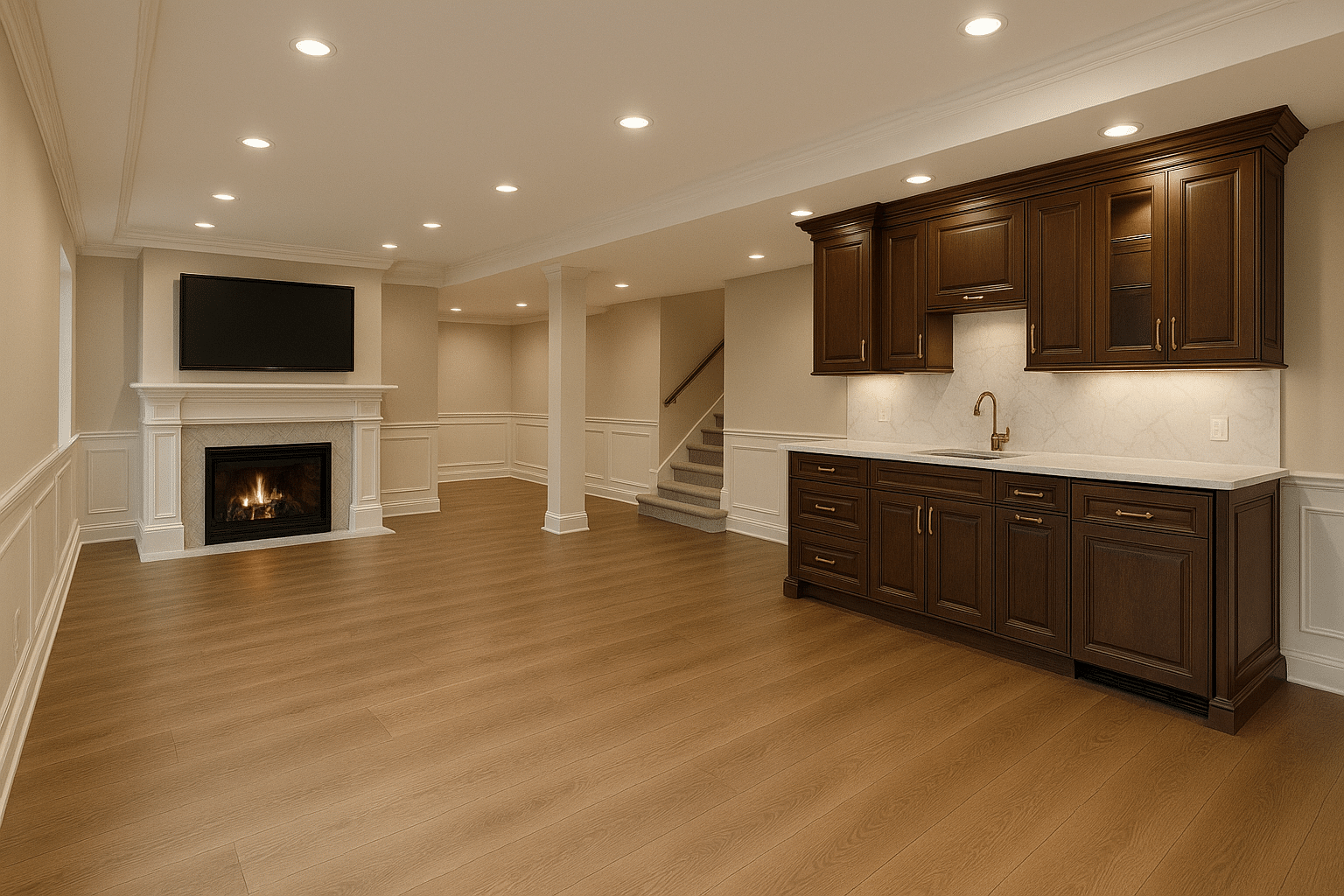
Some basement layout ideas include a kitchenette, wet bar, or refreshment area. Even if installation is not immediate, planning for plumbing and electrical rough-ins provides flexibility.
Coordinating with kitchen renovation experts during the design stage ensures cabinetry, counter space, and appliance placement align with the rest of your home. A well-planned kitchenette can support entertaining, extended family stays, or future lifestyle changes.
Layout decisions should consider traffic flow and proximity to seating areas. The goal is to enhance convenience without overwhelming the basement living space design.
Add a Bathroom for Convenience
Including a bathroom is one of the most practical finished basement ideas. A lower-level bathroom improves functionality and supports longer use of the space.
During basement renovation planning, proper placement is critical. Positioning the bathroom near existing plumbing stacks can improve efficiency. Space allocation should balance comfort with overall basement space optimization.
Consulting bathroom renovation specialists early in the design phase ensures the layout is both efficient and comfortable. Even a compact three-piece bathroom can significantly increase usability.
Prioritize Storage From the Start
Basements often become storage overflow areas. Without a plan, clutter can take over the new living space. Intentional storage design protects your investment and maintains organization.
Consider built-in cabinetry, under-stair storage, or a dedicated storage room separated from the main living zones. These solutions support basement space optimization without reducing comfort.
Mechanical systems also need access. A functional basement design accounts for furnace rooms, electrical panels, and service clearances. Proper planning avoids awkward compromises later.
Focus on Lighting and Comfort
Natural light is often limited in lower levels, so lighting design plays a major role in successful basement layout ideas. Layered lighting, including recessed fixtures, wall sconces, and task lighting, helps eliminate dark corners.
Ceiling height should influence fixture selection. Low-profile lighting can preserve headroom and improve comfort. Light wall colours and strategic mirror placement can also enhance brightness.
Insulation, sound control, and moisture protection are equally important. These elements may not be visible, but they directly impact long-term comfort and durability. A well-executed basement living space design balances aesthetics with performance.
Work With an Experienced Renovation Team
Even strong basement layout ideas require careful execution. Structural considerations, moisture management, and code-compliant electrical work all influence the final outcome.
Partnering with an experienced renovation team ensures every detail is coordinated. Clear communication and detailed planning help avoid common layout mistakes, such as poorly placed support posts or inefficient room divisions.
Professional guidance is especially valuable when integrating the basement into broader family basement upgrades. A cohesive plan prevents the space from feeling disconnected from the rest of the home.
Turning Layout Ideas Into Real Living Space
A finished basement is not simply extra square footage. It is an opportunity to create adaptable space that supports everyday life. Thoughtful basement layout ideas, supported by clear basement renovation planning, transform lower levels into functional extensions of the home.
By focusing on zoning, flexibility, storage, and integrated design, homeowners can achieve meaningful basement space optimization. The result is a comfortable, practical area that evolves with changing needs.
If you are planning a renovation and want layout ideas that truly work for your home, you can book your free in-home estimate to discuss your goals with the team.
continue reading
Related Posts

Many homes in Ancaster have basements that are underused, outdated, [...]

A basement renovation offers one of the most practical ways [...]

Plan a Functional and Comfortable Family Basement A finished basement [...]