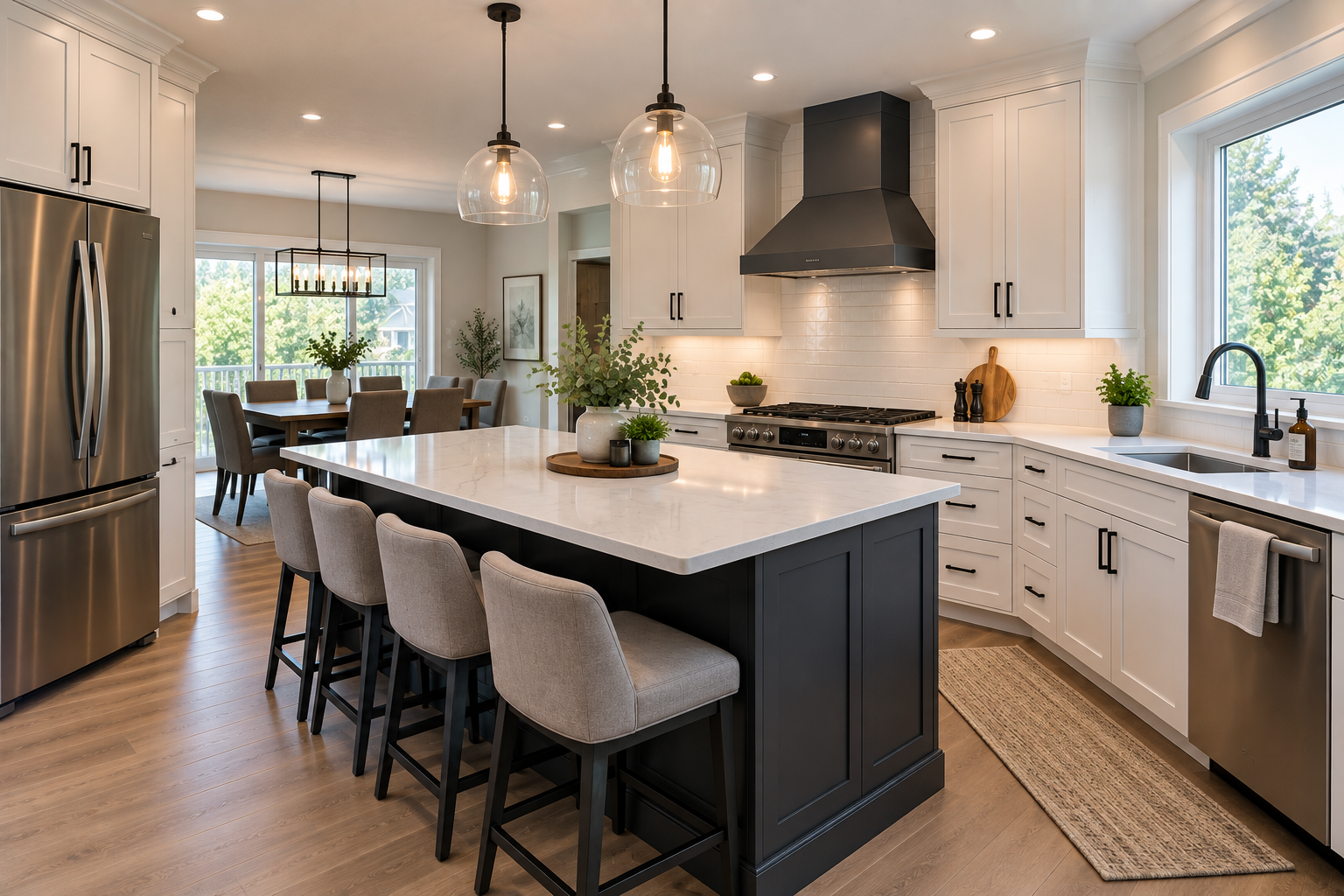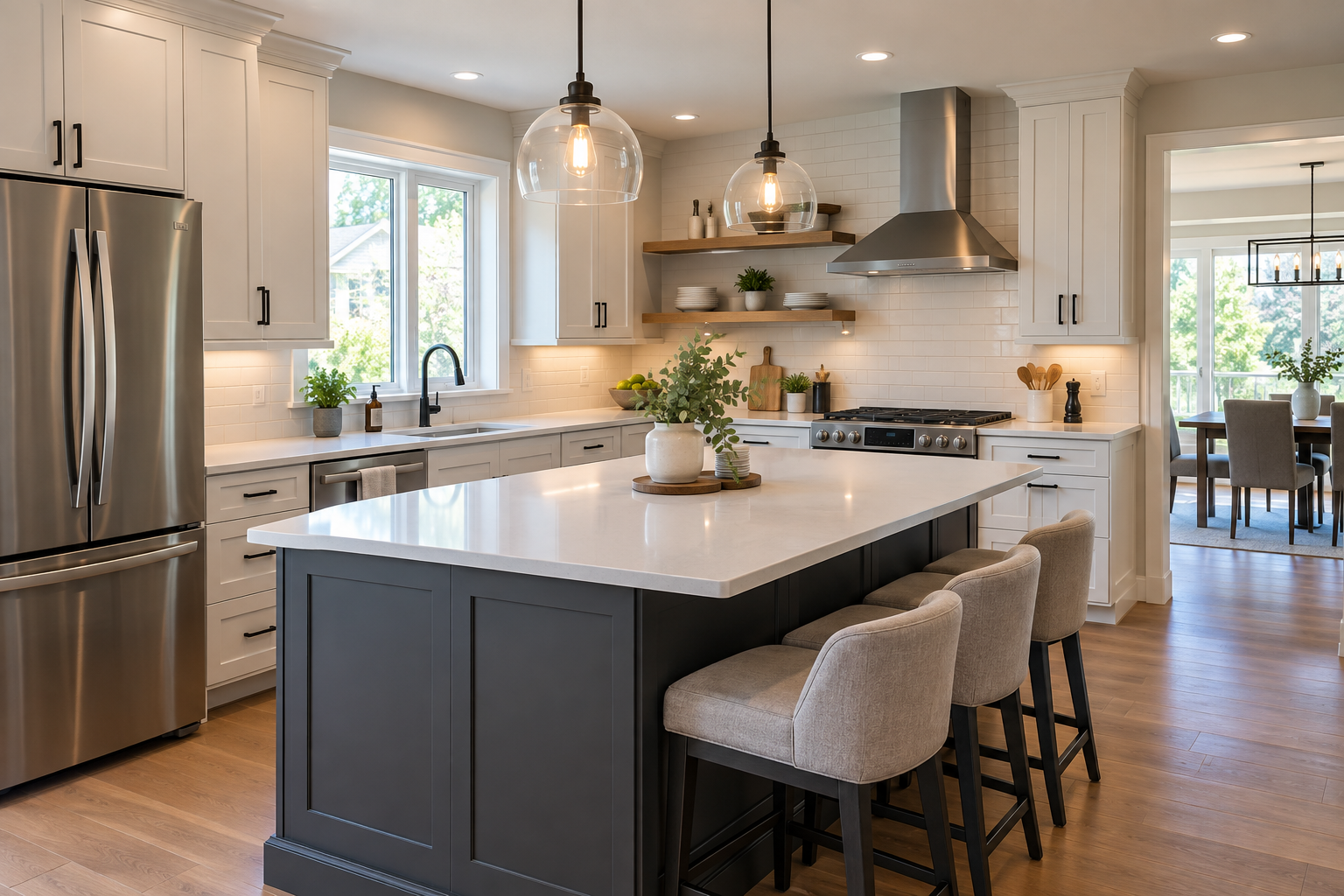
A successful kitchen renovation is about more than choosing attractive finishes or following the latest design trends. The most functional kitchens are designed around the people who use them every day.
For many homeowners across Southern Ontario, the kitchen serves multiple purposes. It is a place for preparing meals, gathering with family, helping children with homework, entertaining guests, and managing daily routines. When a renovation is planned around those real-life activities, the result is a space that feels more comfortable, efficient, and enjoyable to use.
Designing a kitchen around how you actually live starts with understanding your habits, priorities, and long-term needs.
Start With Daily Routines
Before selecting materials or layouts, it helps to consider how your household uses the kitchen throughout a typical day.
Some families spend significant time cooking and preparing meals from scratch. Others rely on the kitchen primarily as a gathering space. Some households need room for multiple people to cook together, while others prioritize storage and organization.
Understanding these patterns helps guide design decisions that support everyday life rather than simply creating a visually appealing space.
Homeowners exploring professional kitchen renovation services often discover that the most successful projects begin with conversations about lifestyle rather than finishes or fixtures.
Questions worth considering include:
- How many people use the kitchen at the same time?
- Where does clutter tend to accumulate?
- How often do you entertain guests?
- Which activities take place in the kitchen beyond cooking?
- What frustrations do you experience with the current layout?
The answers often reveal opportunities that significantly improve the final design.
Design for Efficient Workflow
One of the most important elements of kitchen functionality is workflow.
A well-designed kitchen allows movement between key activity zones with minimal effort. Food storage, preparation areas, cooking surfaces, and cleanup stations should work together in a logical and convenient way.
When workflow is overlooked, even a beautiful kitchen can feel frustrating to use. Excessive walking, crowded pathways, and poorly positioned work areas can create unnecessary challenges during everyday tasks.
Thoughtful planning focuses on how people naturally move through the space. This helps create a kitchen that feels intuitive and supports daily routines more effectively.
For example, placing frequently used cookware near cooking surfaces can reduce unnecessary movement. Locating waste and recycling stations close to preparation areas can simplify cleanup. Positioning dish storage near the dishwasher can make unloading easier and more efficient.
Small decisions like these often have a greater impact on daily satisfaction than cosmetic upgrades alone.
Prioritize Storage That Fits Your Lifestyle
Storage needs vary from one household to another.
A family that enjoys cooking frequently may require extensive pantry space and dedicated storage for cookware. Someone who entertains regularly may need room for serving pieces and specialty appliances. Other homeowners may prioritize storage solutions that help keep countertops clear and organized.
Rather than selecting cabinets based solely on appearance, it is important to consider what needs to be stored and how often those items are used.
Effective storage planning helps reduce clutter, improve accessibility, and make daily activities more convenient. It also contributes to a cleaner and more organized appearance throughout the kitchen.
Well-designed storage can include:
- Deep drawers for pots and pans
- Pull-out pantry systems
- Dedicated recycling and waste storage
- Appliance garages
- Corner cabinet solutions
- Customized drawer organizers
The goal is not simply adding more storage. It is creating storage that supports how the household actually functions.
Create Space for Gathering
In many homes, the kitchen functions as more than a workspace.
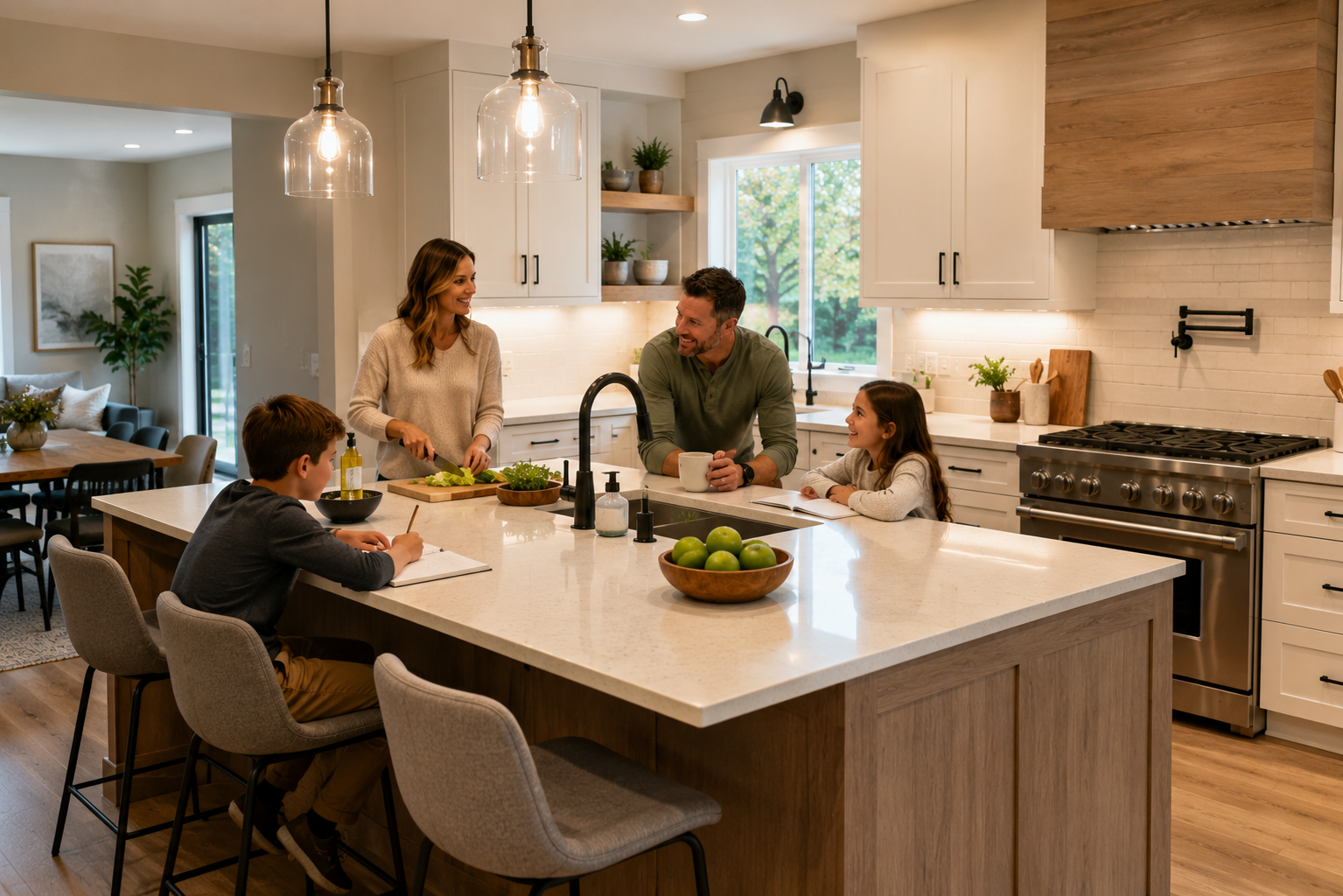
Family members often gather in the kitchen throughout the day. Guests naturally gravitate toward the space during social events. Children may use kitchen surfaces for homework, crafts, or conversations while meals are being prepared.
A kitchen designed around real-life use should accommodate these interactions whenever possible.
This does not necessarily require a larger footprint. Thoughtful layouts, seating options, and traffic flow planning can help create welcoming spaces that support both work and connection.
Islands, peninsula seating, breakfast nooks, and open sightlines can all contribute to a more social environment while maintaining functionality.
When renovations extend beyond the kitchen, homeowners often apply similar principles during whole-home renovation planning to improve how multiple living spaces function together.
Think Carefully About Lighting
Lighting is frequently underestimated during renovation planning, yet it has a significant impact on both functionality and comfort.
Different activities require different types of lighting. Preparing meals, reading recipes, entertaining guests, and creating a comfortable atmosphere all benefit from appropriate lighting solutions.
A layered approach often produces the best results.
Task lighting improves visibility in work areas such as countertops and cooking surfaces. Ambient lighting supports the overall feel of the room. Accent lighting can add depth and highlight architectural or design features.
Natural light should also be considered whenever possible. Maximizing daylight can make the kitchen feel brighter, more open, and more inviting throughout the day.
Well-planned lighting contributes not only to aesthetics but also to safety and usability.
Plan for the Future
A kitchen renovation is a long-term investment, which makes future planning an important part of the design process.
Household needs often change over time. Growing families, changing routines, aging in place considerations, and evolving entertaining habits can all influence how a kitchen functions.
Design choices that support flexibility can help the space remain useful and comfortable for years to come.
Features such as wider walkways, accessible storage locations, durable materials, and adaptable layouts can improve long-term usability without compromising design.
This long-term perspective is equally valuable when homeowners are considering complementary projects such as bathroom remodeling solutions, allowing multiple areas of the home to evolve together and support future needs.
Balance Style With Function
A well-designed kitchen should reflect personal taste, but appearance should work alongside functionality rather than compete with it.
Trends can provide inspiration, but they may not always align with the practical needs of a household. Materials that look impressive in a showroom may require maintenance that does not fit a homeowner’s lifestyle. Certain layouts may appear appealing online while creating challenges in everyday use.
The most successful kitchens balance visual appeal with usability, creating spaces that remain enjoyable long after design trends have changed.
By focusing on lifestyle, workflow, storage, and comfort, homeowners can make choices that support both everyday living and long-term satisfaction.
Partnering With an Experienced Renovation Team
Designing a kitchen around real-life needs often benefits from professional guidance.
Experienced renovation professionals can help identify opportunities to improve workflow, maximize storage, enhance functionality, and create layouts that support the way a household actually lives.
A thoughtful renovation process focuses on understanding how homeowners use their space before recommending solutions. This approach often leads to more practical designs and better long-term outcomes.
Homeowners interested in learning more about previous client experiences can explore the Rob’s Quality Construction HomeStars profile to see how thoughtful renovation planning has helped other homeowners achieve successful outcomes.
Building a Kitchen That Supports Everyday Life
The best kitchen renovations are not defined by trends, luxury features, or visual impact alone. They are defined by how well they support the people who use them every day.
When planning decisions are based on real routines, practical needs, and long-term goals, the result is a kitchen that feels comfortable, efficient, and enjoyable for years to come.
Whether your priority is cooking, entertaining, family time, organization, or all of the above, designing around the way you actually live creates a stronger foundation for renovation success. If you are considering a kitchen renovation, now is the ideal time to book your free in-home estimate and begin planning a space tailored to your lifestyle.
continue reading
Related Posts

Once you decide that your kitchen needs more than a [...]
-
A kitchen can look perfectly acceptable and still be frustrating [...]
A kitchen renovation is one of the most valuable investments [...]