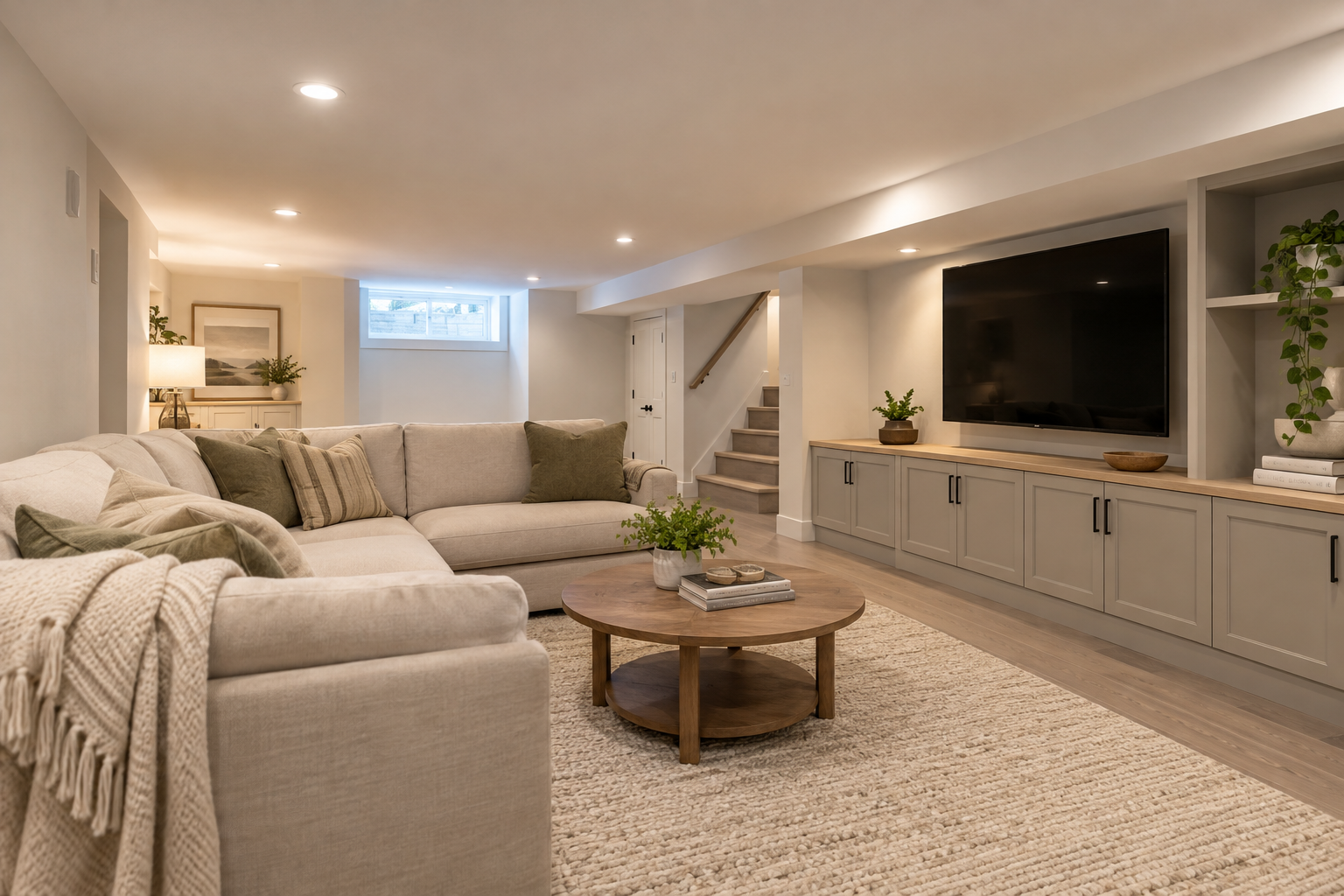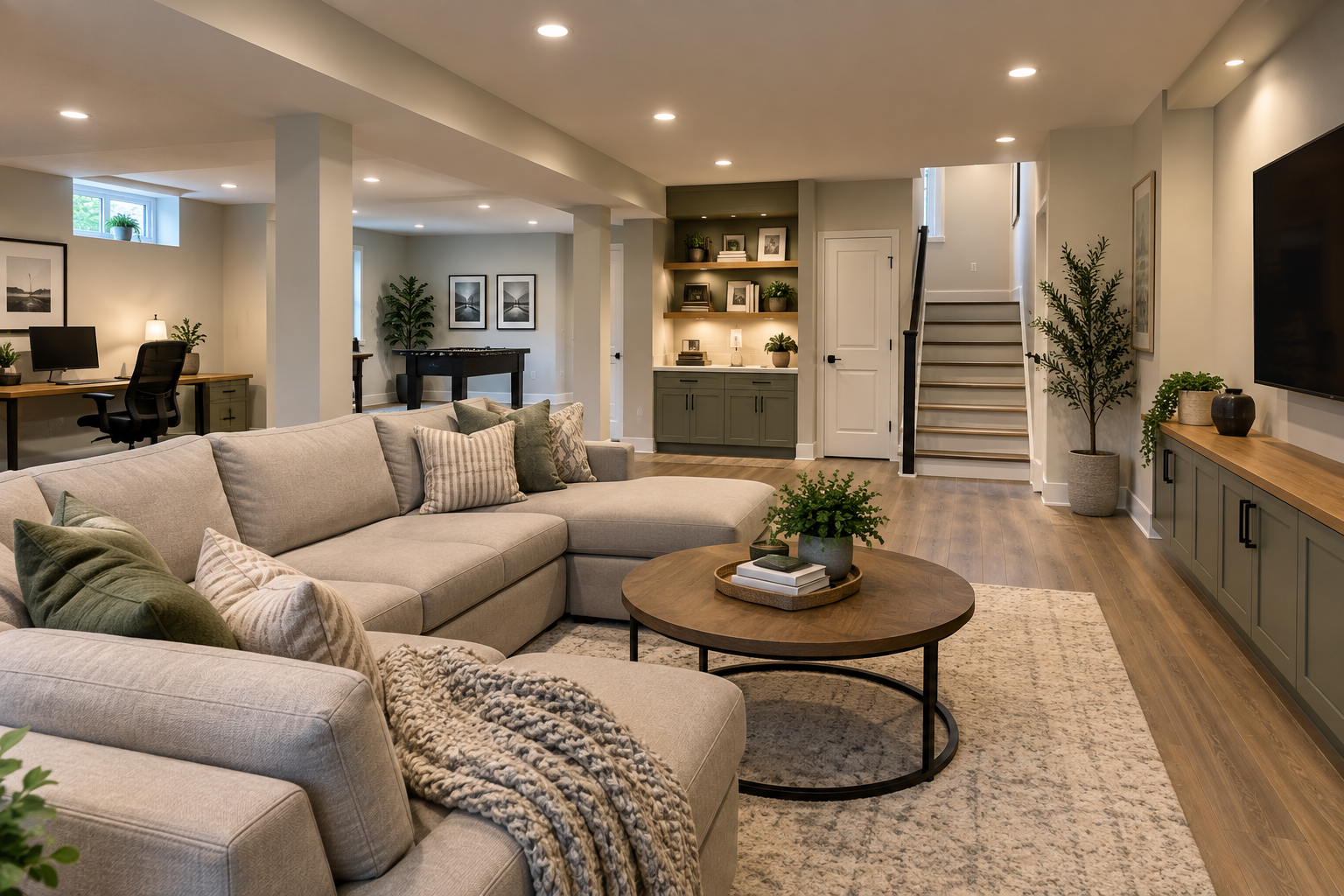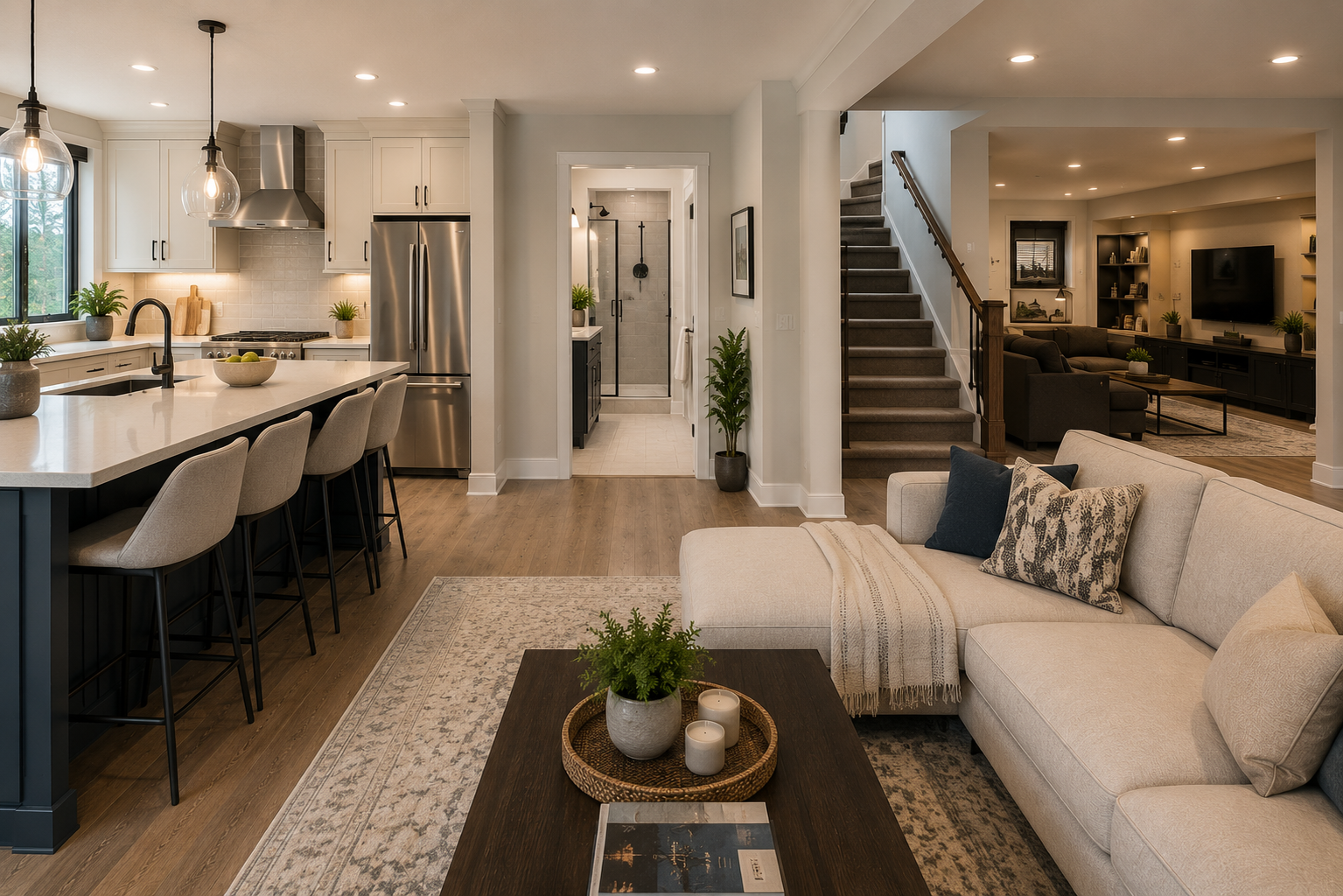
Finished basement walls do not all need to look the same. While painted drywall provides a simple, familiar backdrop, decorative wall treatments can introduce texture, contrast and visual interest that make a space feel more intentional.
Basement wall panels and stone accent walls offer two different approaches to adding character. From wood-look finishes to textured stone features, these materials can change how a basement looks and feels without requiring every wall to become a decorative focal point.
Thoughtful basement wall design involves more than choosing an attractive material. The placement, colour, texture and suitability of each treatment should complement the surrounding flooring, lighting and overall interior.
Why Wall Finishes Make Such a Difference in a Basement
Walls occupy a significant portion of the visible surface in a finished basement. Their appearance influences the atmosphere of the room and how other design elements work together.
Long, uninterrupted wall surfaces can sometimes feel plain when finished with a single colour or material. Introducing texture on a selected wall can add visual depth and create a point of interest.
Decorative wall treatments also affect how light interacts with the room. Raised surfaces, natural-looking textures and repeating patterns can create subtle variations in light and shadow.
Contrast is another important consideration. A textured feature wall may stand out against smooth painted surfaces, while a wood-look finish can complement neutral flooring and simple ceiling treatments.
The goal is not to fill every available surface with decorative details. A carefully selected wall finish can make the basement feel more connected to the rest of the home while maintaining a balanced appearance.
Basement Wall Panels That Add Character
Decorative basement wall panels provide several ways to introduce texture and architectural interest. Different panel styles can create distinct visual effects, from subtle detailing to more noticeable feature walls.
Wood-look wall panels
Wood-look panels can introduce warm tones and natural-looking patterns into a finished basement. They may complement existing wood flooring, cabinetry or furniture.
The selected colour and grain pattern influence whether the result feels understated or more visually prominent.
Slatted wall treatments
Slatted panels introduce a repeating linear pattern that can add structure to a wall. Vertical slats may emphasize the wall’s height visually, while different spacing and finishes can influence the overall appearance.
These treatments can work as a feature behind a seating area or along a selected wall where a consistent pattern is desired.
Decorative textured panels
Textured panels offer an alternative to smooth painted walls. Raised patterns and dimensional surfaces can create depth, particularly when lighting reveals the material’s details.
The intensity of the texture should be considered alongside the size and character of the surrounding space.
Painted panel details
Painted wall panels can introduce architectural character without relying on contrasting materials. Panel profiles and coordinated trim colours can provide definition while maintaining a relatively simple appearance.
Regardless of the style, not every panel product is appropriate for basement conditions. Materials differ in their durability, maintenance requirements and suitability for the existing environment.
Stone Accent Walls in a Basement
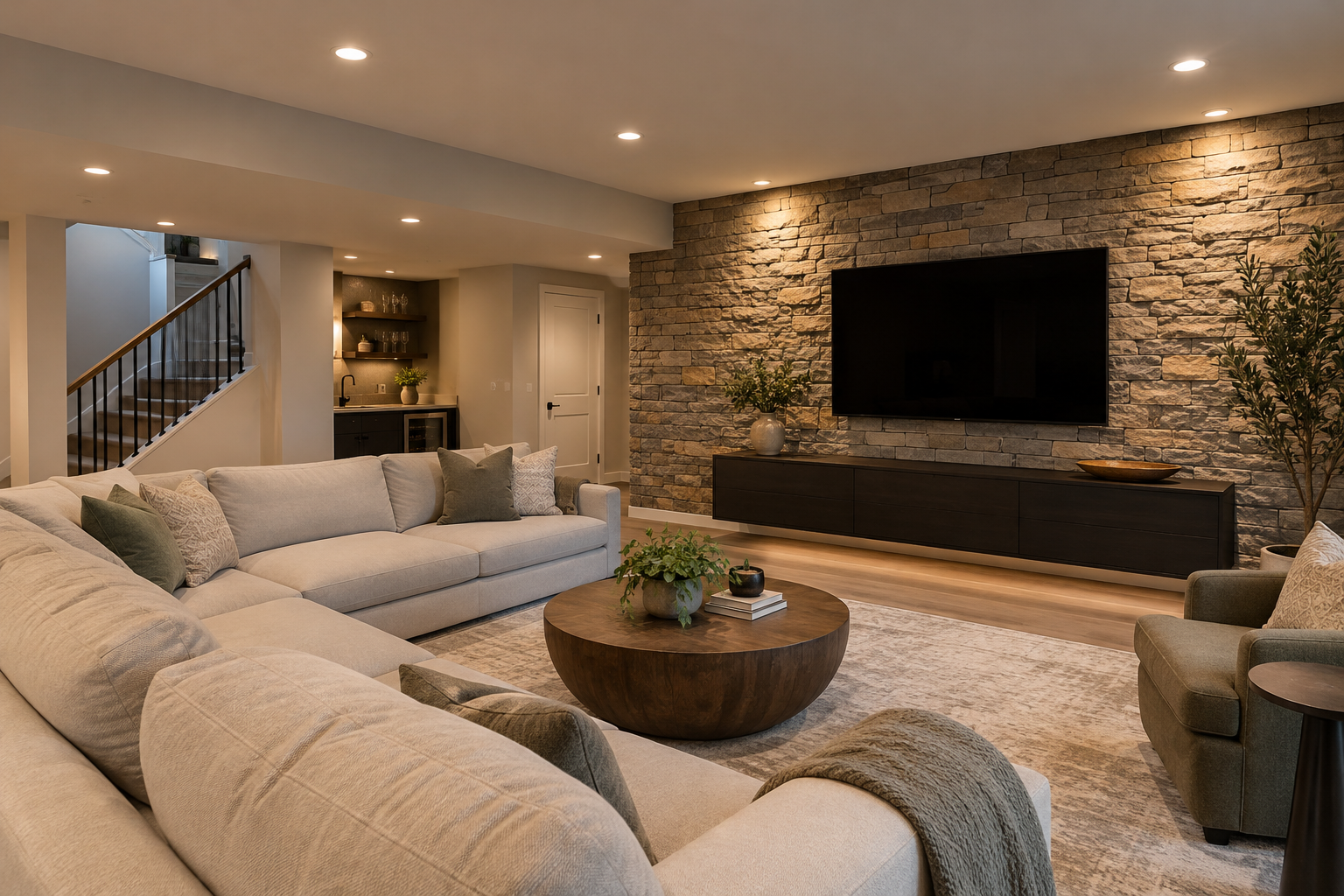
Stone and stone-look finishes provide another approach to creating a distinctive wall feature. Their irregular patterns, varied tones and natural-looking texture can introduce contrast to otherwise smooth interior surfaces.
Basement stone walls may incorporate natural stone, manufactured stone or decorative materials designed to reproduce the appearance of stone.
Natural stone offers variation in colour and texture. Manufactured stone and stone-look materials can provide different appearances and design options, although their composition and practical requirements vary.
A stone accent wall in a basement can become a focal point behind a main seating area or entertainment space. It may also complement an existing fireplace surround where the fireplace, wall conditions and selected materials are appropriate.
Colour selection plays an important role. Lighter stone tones may create a softer contrast with surrounding finishes, while darker materials can establish a more prominent feature.
Stone textures can also work alongside wood finishes, neutral flooring and carefully considered lighting.
However, a highly textured wall can feel visually heavy when applied across a large area. Using stone as a selected accent rather than a treatment for every wall may help maintain balance.
Material suitability and the condition of the existing wall must be evaluated before considering a particular stone treatment.
Should You Choose Wall Panels or Stone?
Decorative panels and stone accents can both add character to a finished basement, but they create different visual effects.
| Consideration | Decorative Wall Panels | Stone or Stone-Look Accents |
| Visual effect | Linear patterns, texture and repetition | Organic texture and material contrast |
| Design flexibility | Multiple profiles, finishes and colours | Different stone appearances and arrangements |
| Typical role | Feature wall or selected wall surfaces | Architectural focal point |
| Design concern | Can become visually busy when overused | Can feel visually heavy in some spaces |
Wall panels may appeal to homeowners who prefer repeating patterns, defined lines or coordinated painted details.
Stone accents may be more appealing when the goal is to introduce a strong material contrast or a natural-looking textured surface.
Neither approach is automatically better. The decision should reflect the desired appearance, surrounding finishes, maintenance expectations and suitability of the selected material.
Where a Feature Wall Makes the Most Sense
The placement of a decorative wall treatment can be just as important as the material itself.
A feature wall behind a main seating area can establish a clear focal point without competing with other decorative elements. In an entertainment area, a textured wall may help visually define the space surrounding a television or media unit.
An accent near a basement entrance or transition area can also introduce character as someone moves into the finished space.
For a multi-purpose basement, selecting one prominent wall may help create visual interest without dividing the entire room into competing decorative sections.
Sightlines deserve consideration. A feature wall is often most effective when it can be appreciated from the main area of the room.
Applying the same distinctive treatment to every surface may reduce its impact. A carefully positioned accent can offer a stronger visual result while allowing the remaining walls to provide a simple backdrop.
Making Wall Treatments Work With Lighting and Flooring
A decorative wall treatment should be considered alongside the materials and lighting used throughout the basement.
Lighting can reveal the texture of slatted panels or stone-look surfaces. Depending on its position and intensity, light may emphasize patterns and shadows or produce unwanted glare.
Flooring colours also influence how a feature wall appears. Wood-look panels may complement flooring with similar undertones, while stone accents can create contrast with simpler floor finishes.
Trim, doors and surrounding painted walls contribute to the overall design. Coordinating these elements helps decorative treatments feel integrated rather than added as unrelated features.
Homeowners exploring basement layout ideas can also consider how furniture placement and sightlines influence the effectiveness of a feature wall.
Visual balance remains important. Combining a highly textured wall with simpler surrounding surfaces can create interest without making the room feel overly busy.
A cohesive basement design allows the decorative material to contribute to the atmosphere while supporting the appearance of the entire space.
What to Consider Before Choosing Basement Wall Materials
Appearance is an important part of choosing decorative finishes, but basement conditions must also be evaluated.
Existing wall condition is a primary consideration. Decorative panels and stone treatments should not be selected solely for their appearance without understanding the surface and environment where they would be used.
Moisture concerns are particularly important in basement spaces. Decorative finishes do not correct underlying moisture problems, and suitability varies between products and materials.
Maintenance expectations also deserve attention. Some textured surfaces may require different cleaning methods than smooth painted walls, while individual products may have specific care requirements.
Homeowners should also consider access to mechanical or other building components that may require future servicing. Decorative treatments should not prevent necessary access.
The appropriate material depends on the actual basement conditions and the requirements of the selected product.
Recognizing these considerations before finalizing the design helps homeowners make more informed decisions about decorative finishes.
Bringing Distinctive Wall Designs Into a Basement Renovation
Decorative wall treatments can be an important part of a finished basement, but they should not be considered separately from the overall renovation.
Flooring, lighting, room layout and surrounding finishes all influence how a feature wall will look once the space is complete.
For example, selecting a textured wall material before considering lighting placement may affect how the finished surface appears. Similarly, flooring and trim choices can influence whether the wall treatment feels coordinated with the rest of the room.
Homeowners exploring basement renovation ideas can benefit from considering these design relationships together rather than making each selection independently.
Rob’s Quality Construction provides basement renovation services for homeowners in Burlington, Hamilton and surrounding service areas.
Considering decorative finishes within a complete basement renovation allows homeowners to evaluate wall treatments alongside the space’s existing conditions, intended use and overall design direction.
The objective is to create a finished interior where individual features complement one another instead of competing for attention.
Give Your Basement a More Distinctive Finish
Decorative basement wall panels and stone accent treatments can add texture, contrast and personality to an otherwise simple interior.
Wood-look panels, slatted details, painted features and stone textures offer different visual possibilities. The most suitable approach depends on the desired appearance, surrounding materials and existing basement conditions.
A distinctive basement does not require decorative finishes on every wall. One carefully selected feature can create a focal point while allowing the rest of the space to remain visually balanced.
If you are considering distinctive wall finishes as part of a larger basement renovation, contact Rob’s Quality Construction for a free in-home estimate to discuss your existing basement, renovation goals and the design possibilities appropriate for your space.
continue reading
Related Posts

A basement can offer valuable additional living space, but limited [...]
-
An unfinished or underused basement can create an obvious question: [...]

When several areas of a home need improvement, deciding where [...]